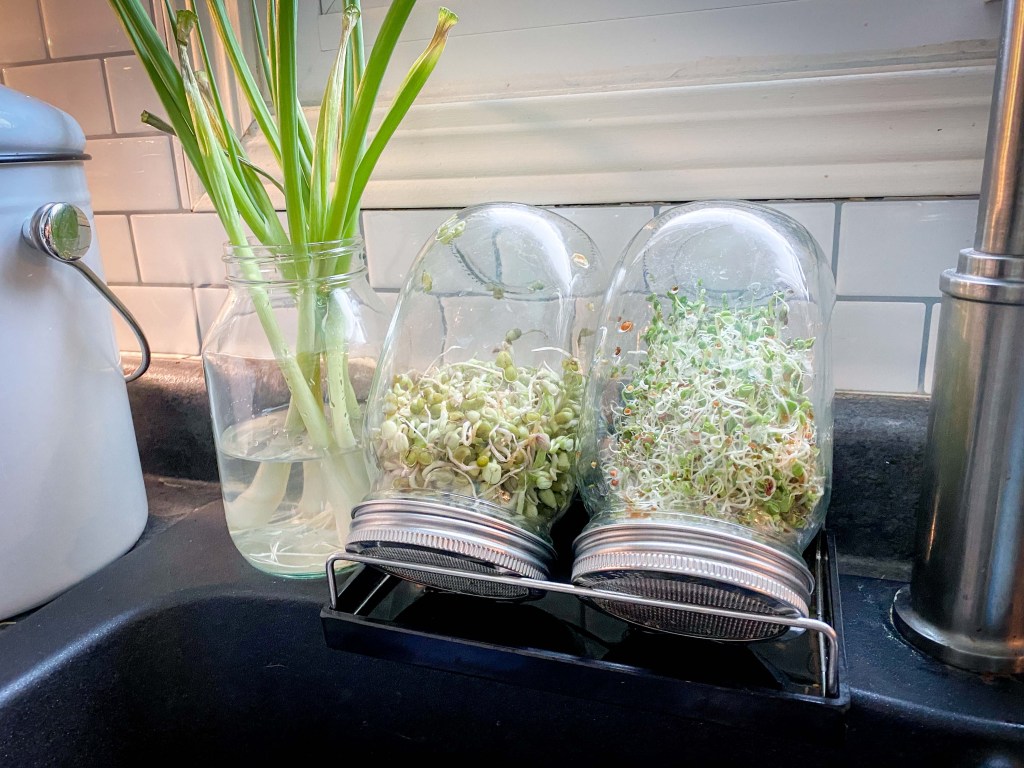
You may notice microgreens at your local market or grocery store. These sprouts are packed with nutrients and are a great addition to your diet. The problem is that buying them at the store reduces their freshness and limits what types of microgreens you have access to. Not to mention they are definitely overpriced and using more plastic than is necessary.
The solution is growing your own microgreens. It is super cheap, easy, and quick. I started growing microgreens this summer, and I have a few tips to share based on my experience.
Materials
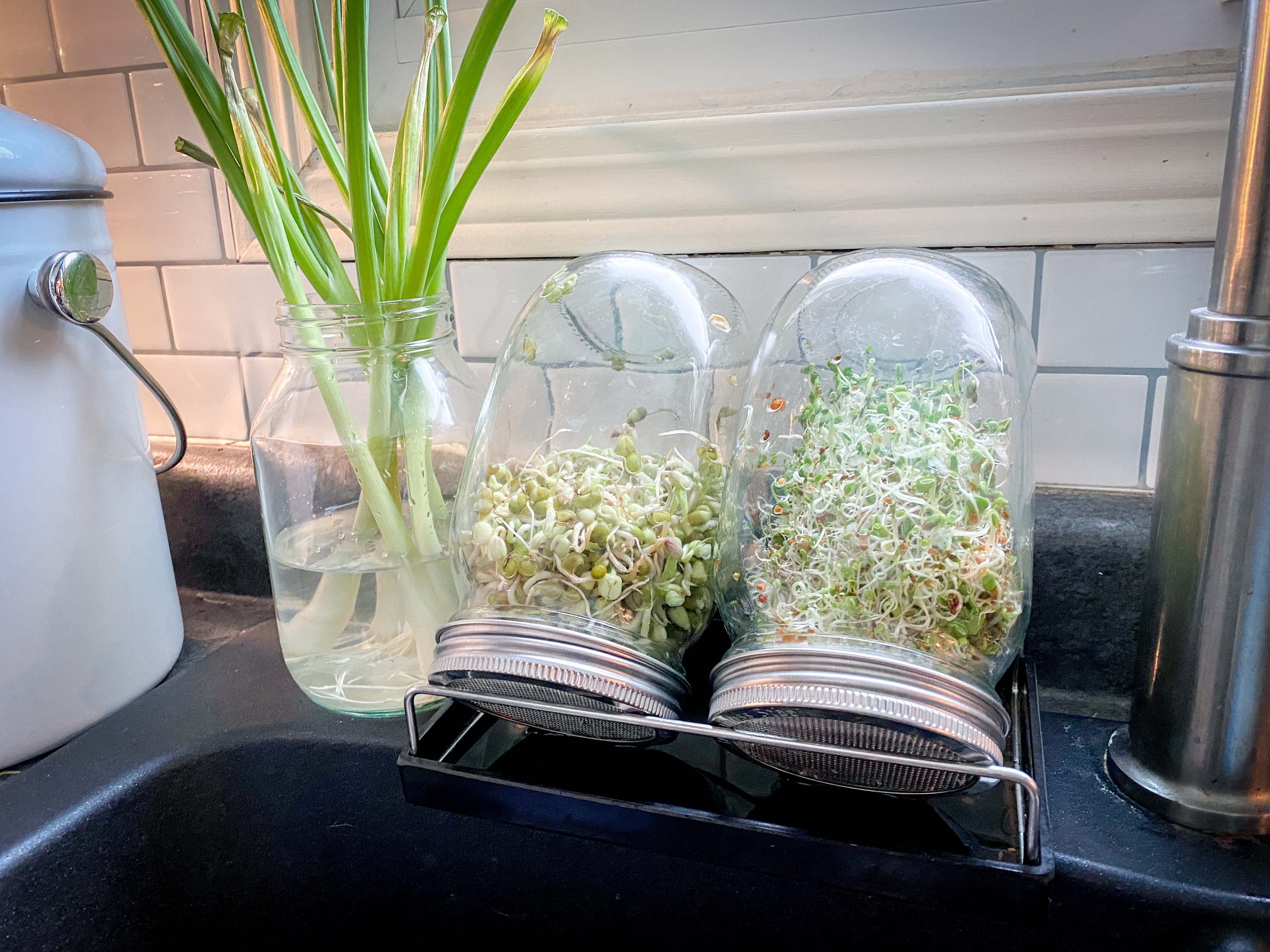
There are different ways to grow microgreens, but I feel like the way I do it is simple and takes up little space. Some people use layered trays, but I appreciate not having something take up too much counter-space. Other than the container, you will need seeds. There are so many different types and they all have different flavors and nutrients. Some are spicy, some are bitter, it really is fun to do a taste test. If you have a chance to try different kinds from a farm or market, I recommend it so you can see what you like. When you purchase your seeds, I recommend making sure they are organic. Here is what I use:
Process
Growing microgreens is pretty simple. Mine don’t have direct sunlight and they grow just fine. Here are the steps I follow:
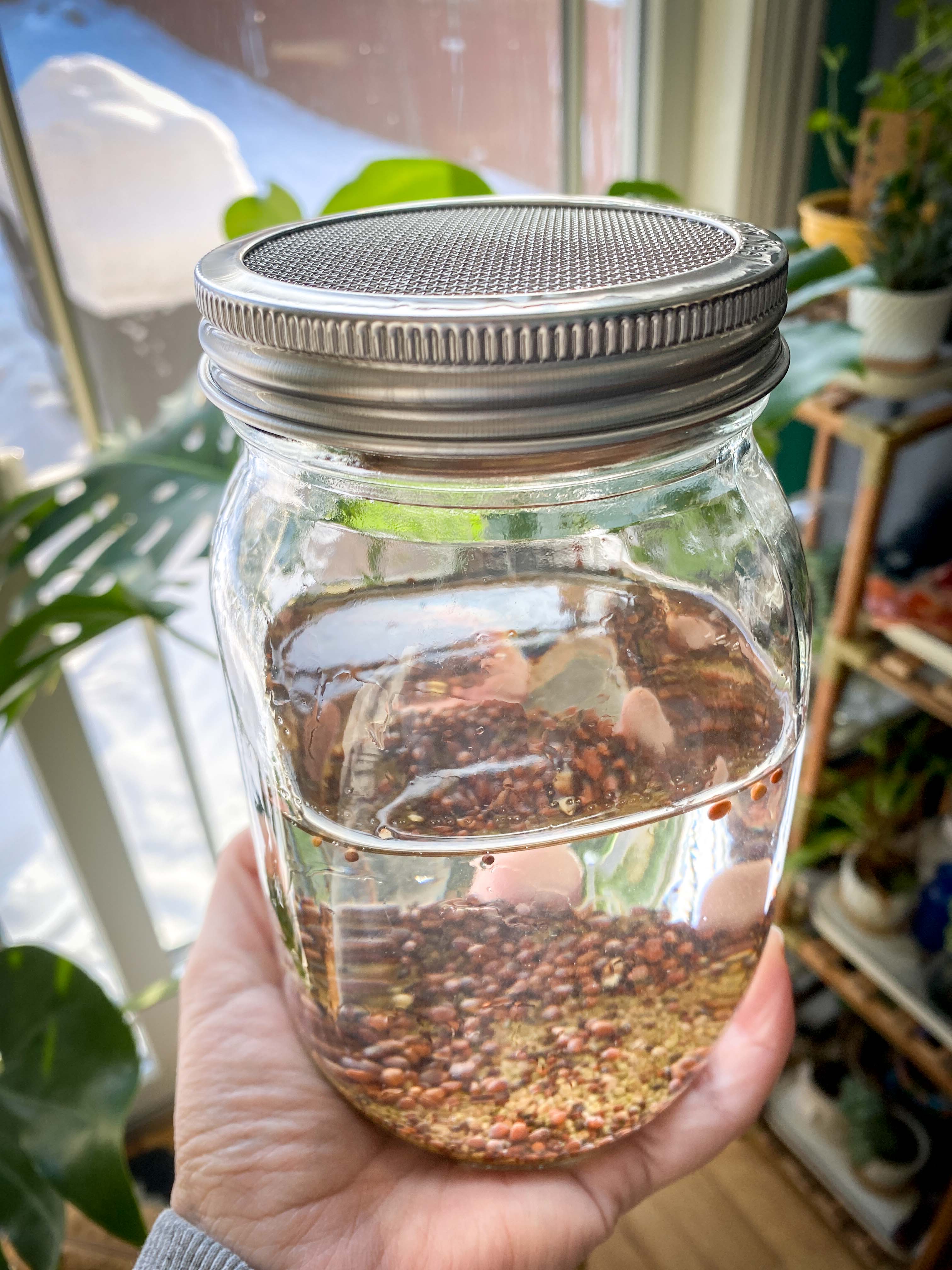
- Begin by measuring out two tablespoons of seeds into a jar.
- Put the lid on with the screen and run water in the jar. Swirl the seeds in the water to rinse them. Dump the water and repeat a few times.
- Fill up the jar with water and let sit for about 8 hours.
- Empty the jar and kind of swirl it as it empties so the seeds spread out in the jar a bit.
- Water the seeds each day and empty the water.
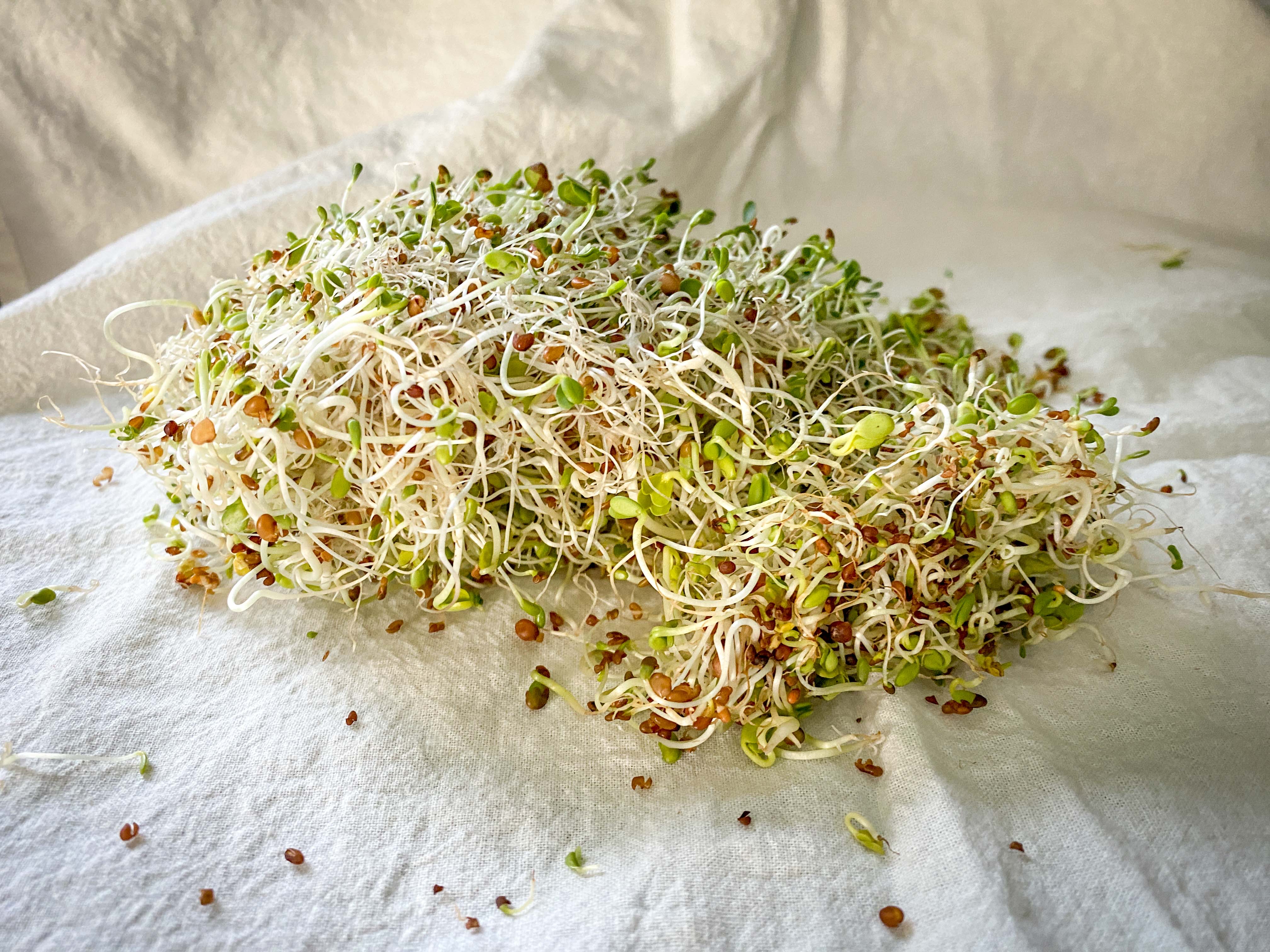
- In about a week you should have sprouts ready to eat!
- To preserve sprouts once they are grown, take them out of the jar and wrap them in a tea towel and place in your fridge.
Ideas for Use
I like to use microgreens in my salad and on sandwiches. You can also use them on ramen. They can be added as a garnish for soups, roasted vegetables, avocado toast, and just about anything.
More Resources
I learned most of what I needed to know from Doug Evans. I recommend checking out his Instagram page if you would like to learn from him.
 Feet to the Earth
Leave a comment