
Dump and bake recipes are a great way to ease into simple cooking while also creating a meal full of flavor and diverse with plants. This specific recipe is a Tuscan take on the idea, but you could easily change the flavor profile to Mexican, Thai, Greek, or any other flavor you desire. I simply looked in my pantry to see what I had and this is how it came together. To switch up the cuisine, just use ingredients reflective of that dish and remember that the orzo needs to be cooked in a 2:1 ratio (2 parts liquid, 1 part orzo) for about 30 minutes at 400 degrees. Check out the recipe, and then continue on to learn some more tricks.
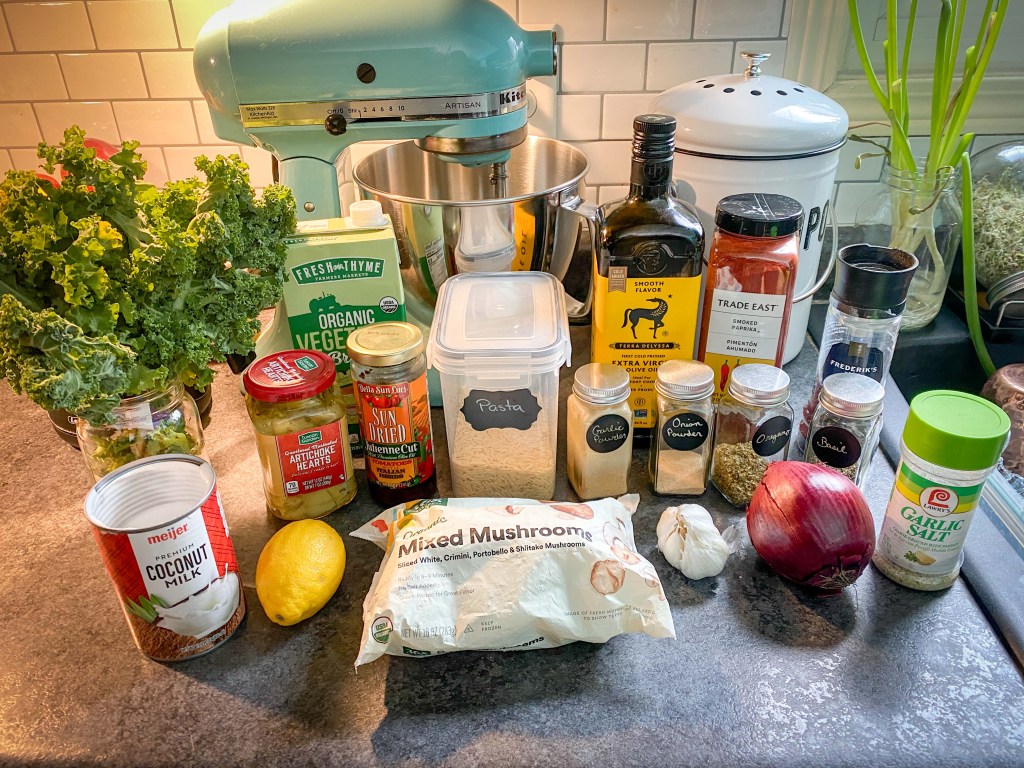
This creamy orzo dish is rich in dynamic flavors, but also so simple.
This recipe can easily be altered to give it a different flavor profile. Keep the ratio of 2:1 for liquid to orzo, and then the rest of the ingredients can be up to you!
Ingredients
- 1 cup Orzo
- 2 tbsp Olive Oil
- 2 Garlic Cloves (minced)
- 1/4 cup Sun Dried Tomatoes
- 1/2 cup Artichoke hearts
- 1/2 Medium Red Onion (diced)
- 1/2 cup Coconut Milk
- 1 1/2 Cup Vegetable Broth
- 1/2 cup mixed mushrooms (I used frozen)
- 1 tbsp Garlic Powder
- 1 tsp Onion Powder
- 1 tsp Garlic Salt or Plain Salt
- 1 tsp Black Pepper
- 1 tsp Smoked Paprika
- 1/2 cup Kale (cut)
- 1/2 Lemon
Directions
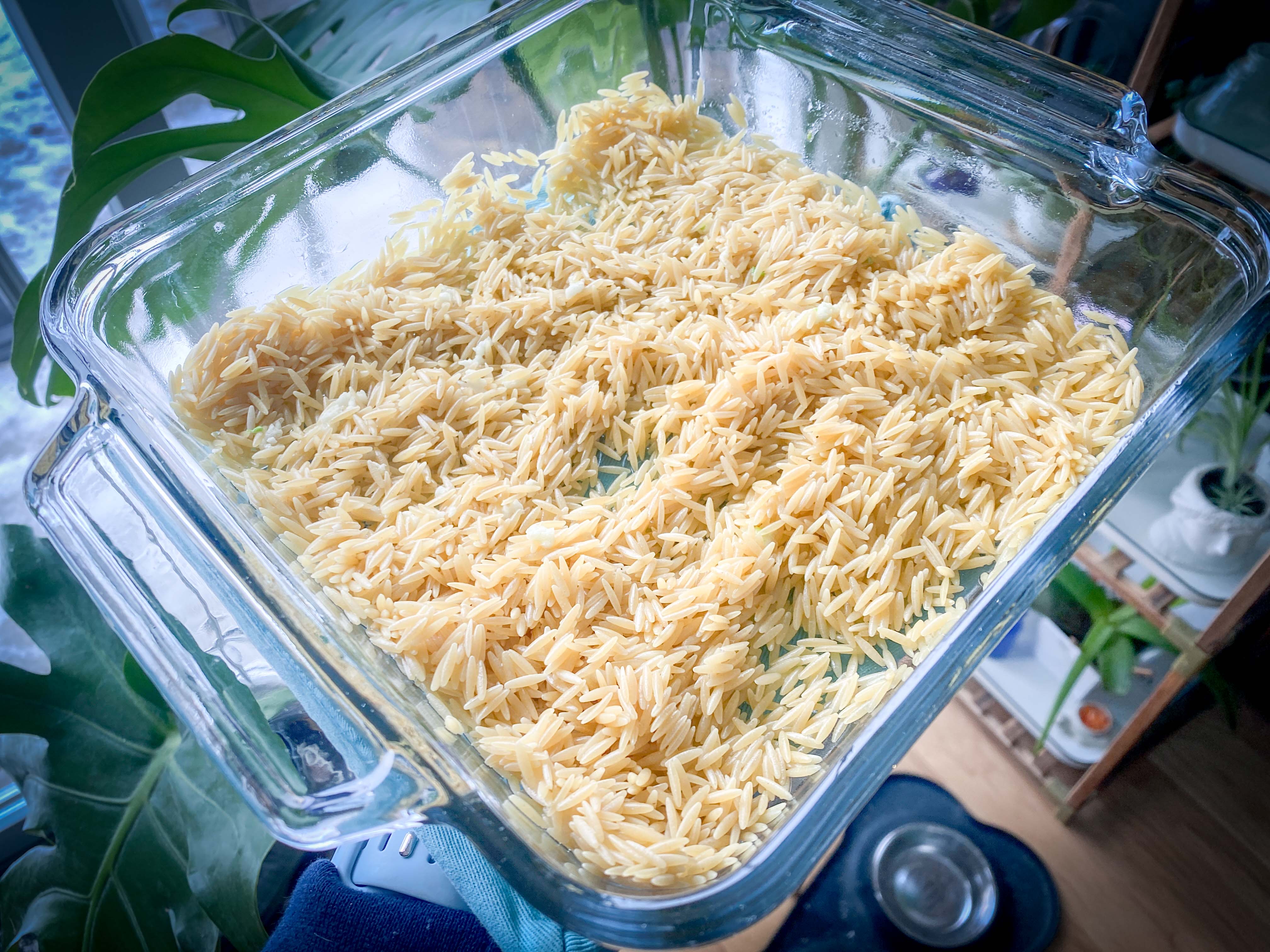
- Preheat oven to 400 degrees. You will need a 9″x9″ baking dish for this recipe. This is a dump and bake recipe, but if you want to take it to the next level, I recommend toasting the orzo with the olive oil and garlic for 5 minutes in your baking dish first. This adds a nutty, richer flavor to the orzo.
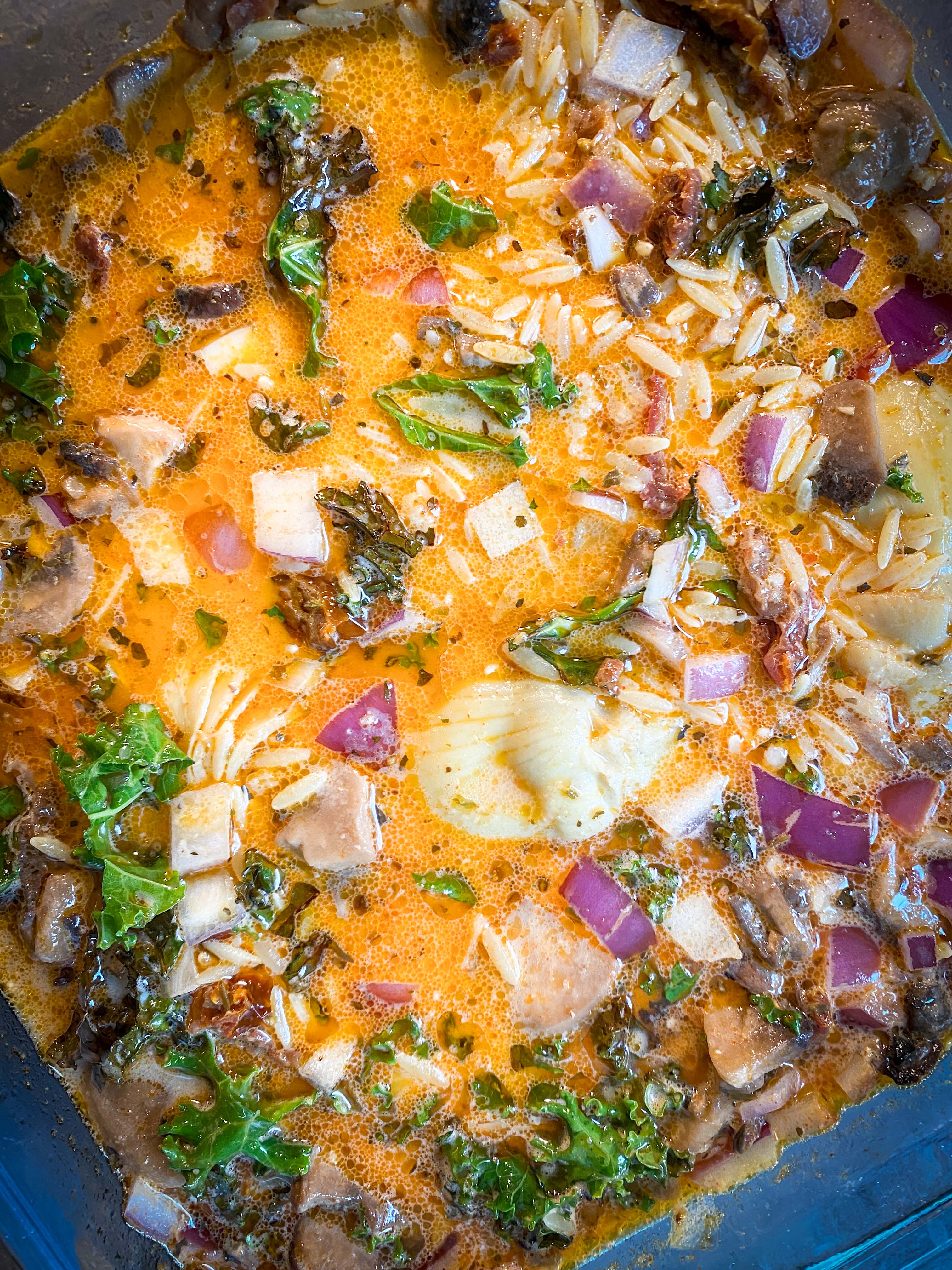
- If you toast, simply add the rest of the ingredients (except the lemon juice) and stir after the 5 minutes in the oven is up. Sprinkle the kale on top. If you don’t toast, dump and stir everything in except the lemon juice and sprinkle the kale on top. Cook for 15 minutes.
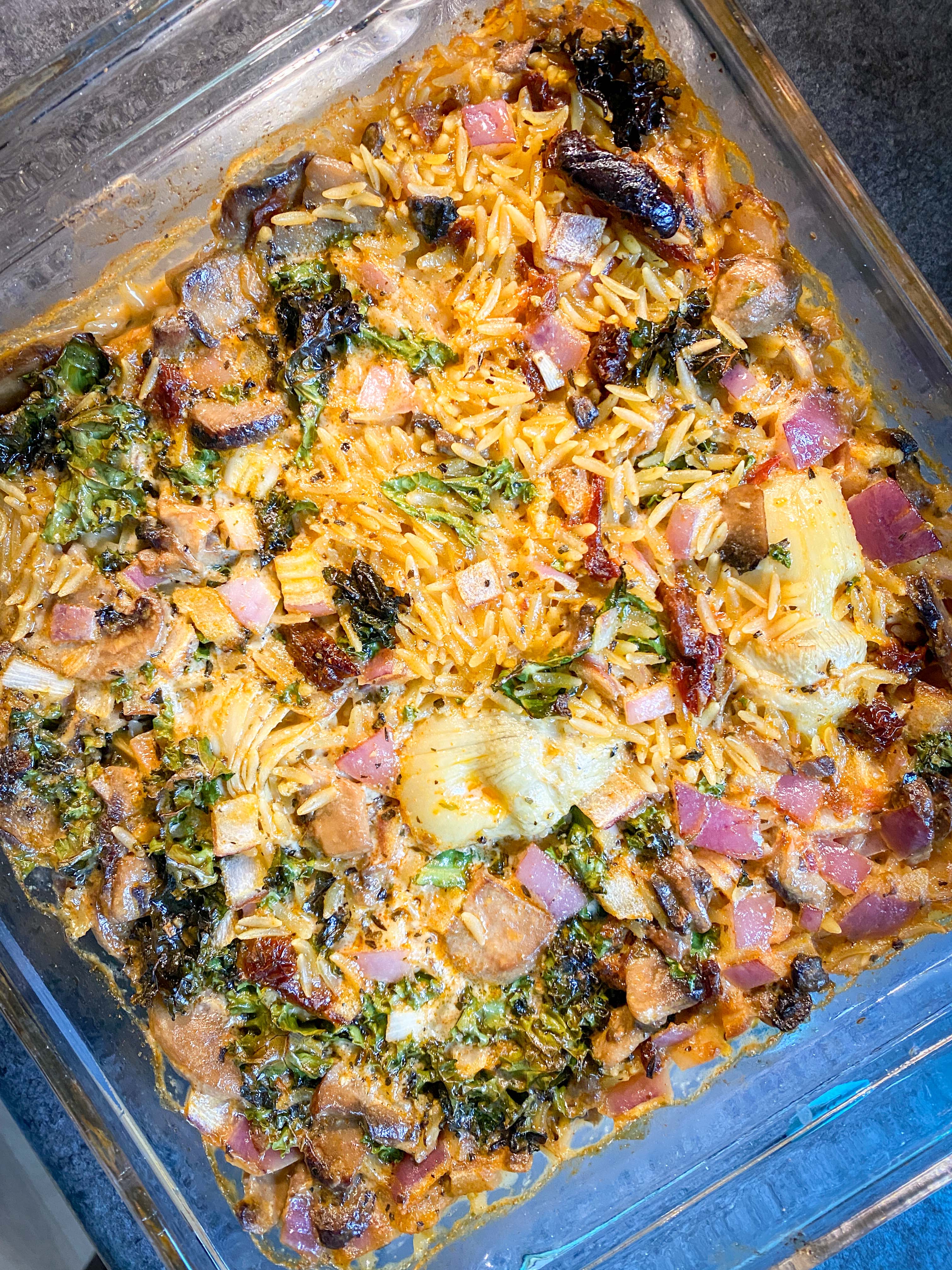
- Take out the pan, stir everything, then cook for 15 more minutes.
- After cooking, take out and squeeze the lemon juice on top.
- Optional-serve with basil if you have it. (I wish I did) You could also grate some vegan parmesan cheese on top.
Nutrition
Per Serving: 243 calories; 13 g fat; 28 g carbohydrates;
6 g protein; 0 mg cholesterol; 906 mg sodium.
The first step in the directions mentions a next level trick. I will try to incorporate these as I share dishes to help you increase the flavor so you are satisfied and not feel like you are missing out on taste. Toasting is a secret I use with pasta, rice, nuts, and seasoning. I don’t use it all the time, but there are some dishes that come to life when you do this. I’ll be sure to include this tip if I use it in future dishes.
Another concept I want to hit today since we are talking about flavor are the pillars of good cooking. When you think about the best food you’ve ever eaten, there were probably four elements that made that dish ooh la la. Those key elements are salt, fat, acid, and heat. The key to putting them together is knowing what your options are and learning how they can pair well together. I will share more on this at another time. This dish included olive oil and coconut milk for fat, garlic salt and broth for salt, lemon juice for acid, and toasting/baking for heat. Taking one of these elements away reduces the enjoyability of the meal. Eating vegan is not just steamed broccoli and plain brown rice. To make vegan dishes that have you shutting the door on animal products, you need to learn the relationship between these pillars and how to make them work for you.
If you would like to make this dish even healthier, you can use whole grain orzo, remove the coconut milk or olive oil, or use water instead of broth. I also considered adding some cannellini or butter beans, but I did not have any on hand. This would bump up the protein, fiber, and add more nutritional value.
Want to learn more? Check out the series on Netflix called Salt, Fat, Acid, Heat or the book by the same title written by Samin Norsrat.


 Feet to the Earth
Leave a comment