
It Begins
The story behind the blog.




-
New Series Coming Soon: Doable Vegan
Earlier this month, my dad received news that areas of his health are declining. Much of the advice given to improve his health was diet related-lower his sodium, eat less processed foods, etc. My dad is eager to make diet changes and he is impressed by what I have been able to make as I’ve moved to a whole-food, plant-based diet. The problem is that what I do takes work. It takes planning, prepping, lots of dirty dishes, and many other inconveniences. My dad takes care of my mom full time and has so much responsibility and stress weighing on him. No wonder he turns to quick, easy food.
Around the same time I heard about his health, I also started thinking more about what I am feeding my husband and son. Sometimes I make three different meals for dinner and mine is the only one that is healthy. I’ve been a bit selfish with spending my time focusing on my recipe, my meal, that I often turn to quick and easy for Edwin and Michael. That means lots of processed foods. Michael and I have decided it is time to make a switch to healthier options and he is totally on board for a shift for the whole family.
With all of that being said, I am feeling a need to take what I have been doing for myself and refine it so that it is more practical. Many of my friends have also shared an interest in making changes, but how do they find the time to create these meals. So, I’ve found a purpose. I am going to start a new series on this blog called Doable Vegan. The focus will be on how can I take the cooking and nutritional knowledge I’ve gained and apply it in a way that it is more accessible for others. Here is the criteria I’m hoping to follow as I develop recipes:
- quick prep-either the time to actively work in the kitchen is short, or the cook time is short
- minimal dishes-my kitchen often looks like a disaster zone after cooking-how can I prep smarter, not harder
- reasonable amount of ingredients-sometimes I open up recipes that have over 20 ingredients, how can I simplify a bit
- likeable-I want to make dishes a nonvegan will love
This will be a learning process for me, and I’m excited to have you join me as I experiment, learn, and share. Posts in this series will feature recipes, cooking tips, meal planning suggestions, equipment recommendations, and any other advice I think will help make this possible for others.
Today, I’d like to share one of my favorite tools in my kitchen: my Ninja Foodi. Toaster Oven. It doesn’t have to be this brand, but I love my combination toaster oven. I use it to air fry, bake, toast, roast, cook, etc. Although I could do these things with other tools, I love how it is all built into one machine. I often prefer this equipment to my oven because it is so convenient. Preheating takes only a few seconds, I’m not heating up a huge oven for smaller dishes, and it folds up when I’m not using it (which is very rare). I will be using this tool quite a bit and wanted to share in case you were wondering how I cook some of my dishes. Thanks dad for the awesome gift! So, stay tuned for future posts on making eating vegan doable.


-
Podcast Reflection: Survival is a Creative Act

Last week I listened to episode #807 of the Rich Roll podcast and it was quite inspirational. Rich interviewed his guest, Suleika Jaquad, who discusses creativity as a way to help us survive. When she was 22 she was diagnosed with leukemia. During her treatment she turned to journaling to cope and eventually that led to a column for the New York Times called Life, Interrupted. Her cancer went into remission until 10 years later when it returned. This time, journaling was not an option, so she turned to painting as her creative outlet.
There were a few pieces that stood out to me that I’d like to document and possibly use as a catalyst for some of my future decisions:
- In the podcast she mentions how people often say live each day as if it were your last. The sentiment is nice, but it is very unrealistic advice. Suleika decides to take that advice from a different perspective and live every day like it is her first. With this mentality, she approaches each new day with wonder and curiosity. Small moments can be beautiful and big. I feel like this really aligns with my goal for being present and more mindful.
- I also love how a theme throughout the discussion was how creativity improves our lives and helps us digest what life brings. I have recently started journaling each day. I’m not stressing about it, but just jotting down what is on my mind. I like not having pressure for how much I have to write, but just put ideas on paper as I process life.
- To align with making time for more creativity, I think I need to cut back on something that is inhibiting my creativity…social media scrolling. I waste so much of my life looking on my phone and I want to change that. I’m not ready to get rid of my social media accounts, but I’m going to designate two times during the day that I can briefly look. This is how I often find recipes and keep up with some of my interests, but I can do that in 10 minutes a day rather than an hour or more. I’ve always noticed that my greatest creative moments have come from boredom. I used to make time for creativity and I absolutely love the feeling of being swept away with a creative project. I’m excited to get that back. Not scrolling will provide more opportunities.
- The other piece of the podcast that I really appreciated was how our lives can be stuck between joy and grief, happiness and dread. During her most recent treatment, her husband, Jon Batiste, is at a time in his life when he is seeing so much success in his musical career and is being praised for his brilliant work. At this same moment Suleika is, once again, in constant suffering and questioning if her life has a future. I’ve experienced this quite a bit lately where one aspect of my life is beautiful and full of life while another is a deep, dark pit. That is life and we learn to navigate through the juxtaposition.
I absolutely love the Rich Roll podcast and would recommend anyone who is interested in gaining new perspectives, learning how to do the work to improve your life, and listening to a good message check it out. Here is a link to the episode I talked about today.
-
Grow Your Own Microgreens
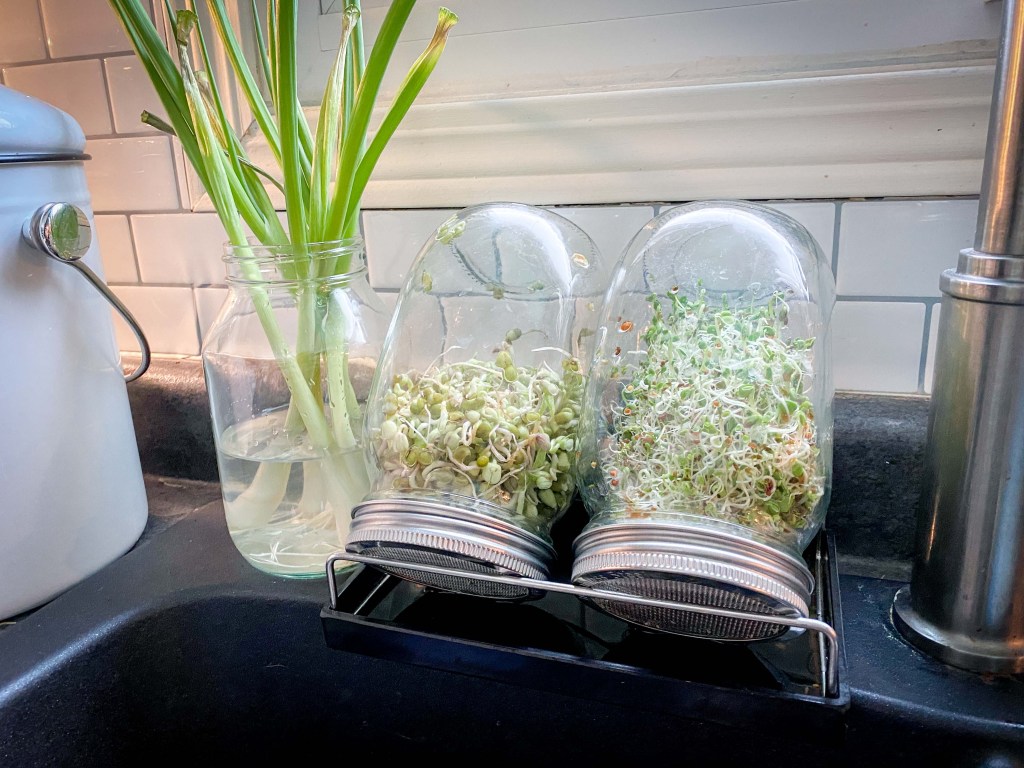
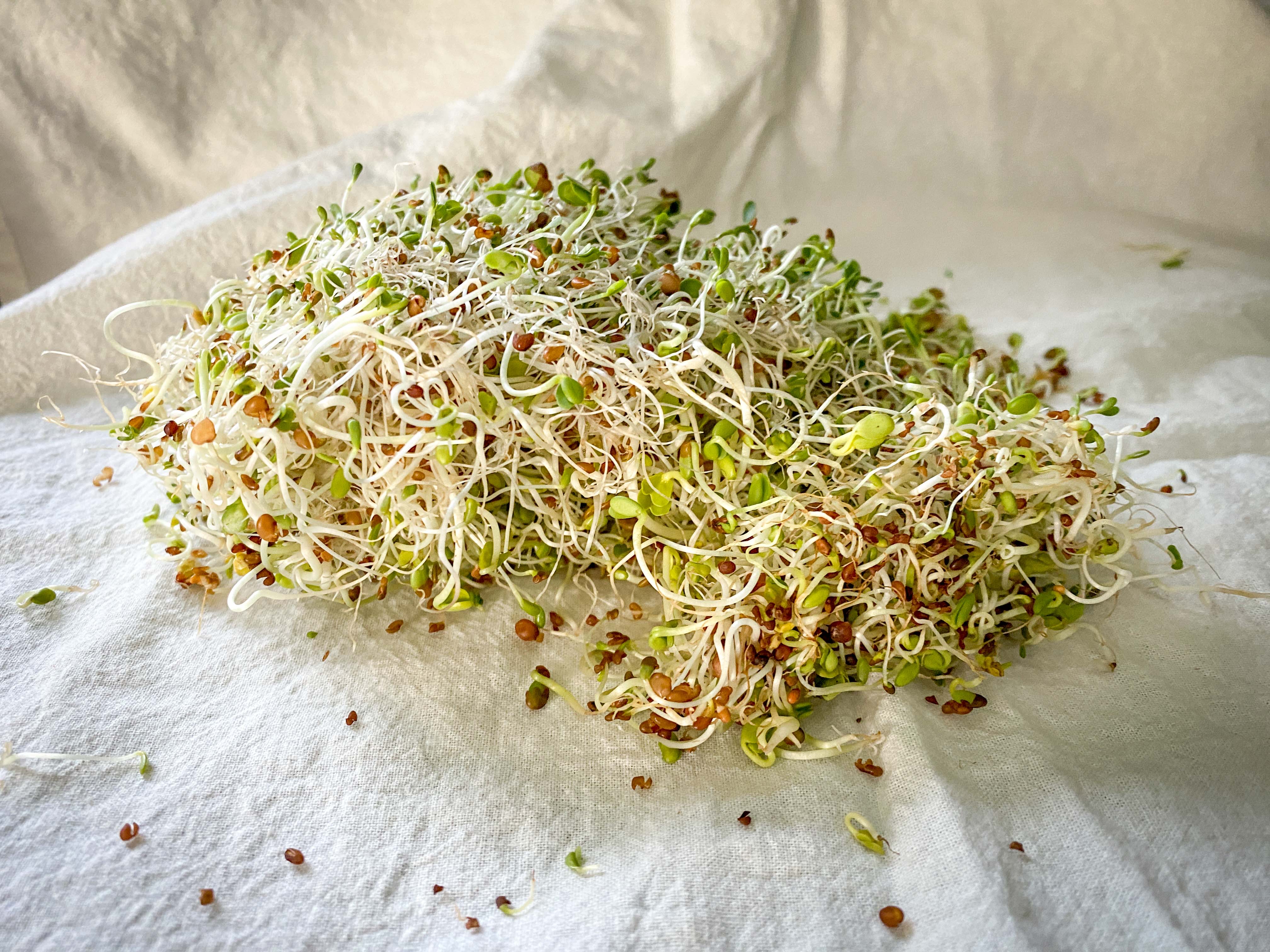
You may notice microgreens at your local market or grocery store. These sprouts are packed with nutrients and are a great addition to your diet. The problem is that buying them at the store reduces their freshness and limits what types of microgreens you have access to. Not to mention they are definitely overpriced and using more plastic than is necessary.
The solution is growing your own microgreens. It is super cheap, easy, and quick. I started growing microgreens this summer, and I have a few tips to share based on my experience.
Materials
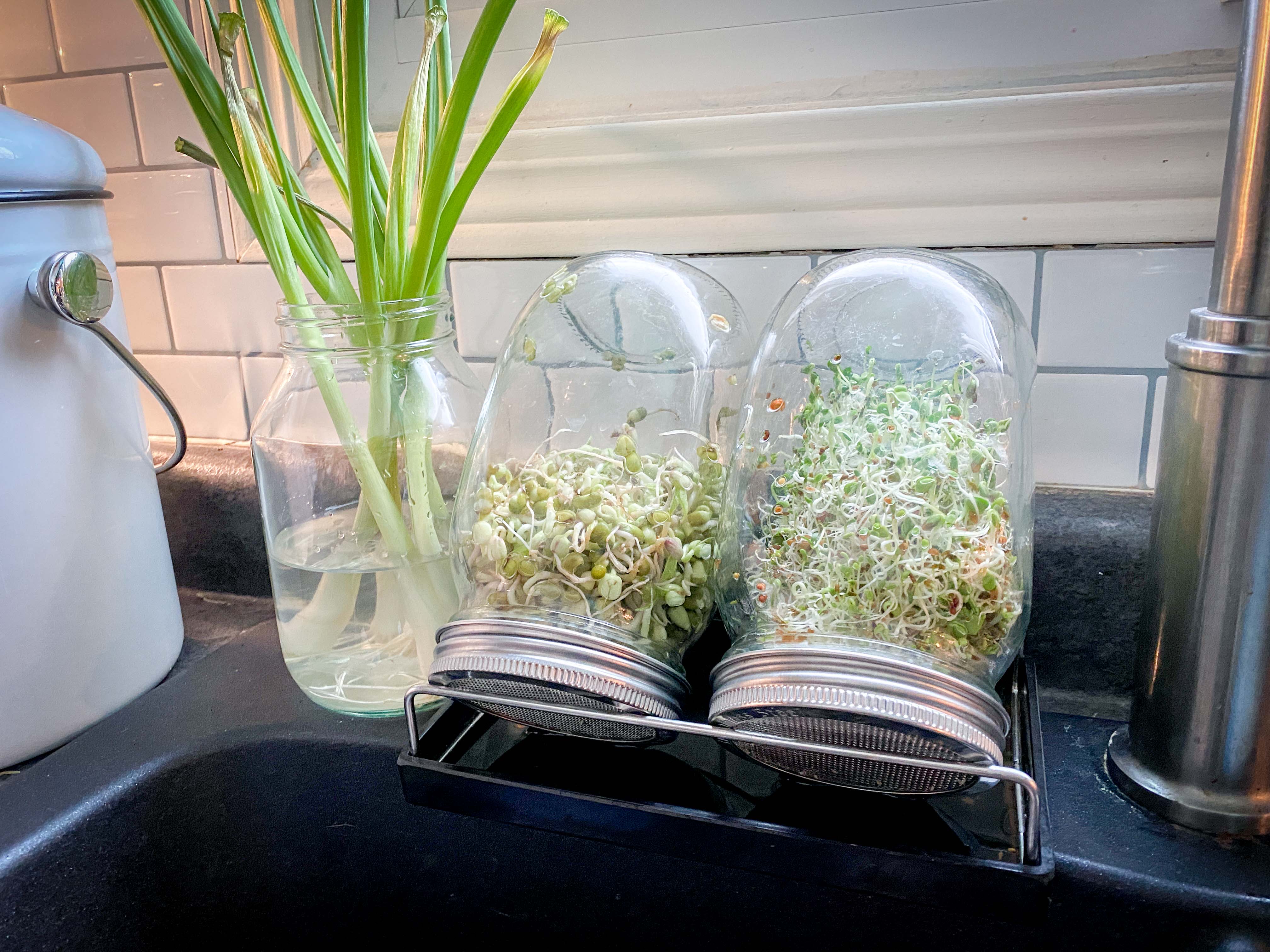
There are different ways to grow microgreens, but I feel like the way I do it is simple and takes up little space. Some people use layered trays, but I appreciate not having something take up too much counter-space. Other than the container, you will need seeds. There are so many different types and they all have different flavors and nutrients. Some are spicy, some are bitter, it really is fun to do a taste test. If you have a chance to try different kinds from a farm or market, I recommend it so you can see what you like. When you purchase your seeds, I recommend making sure they are organic. Here is what I use:
Process
Growing microgreens is pretty simple. Mine don’t have direct sunlight and they grow just fine. Here are the steps I follow:
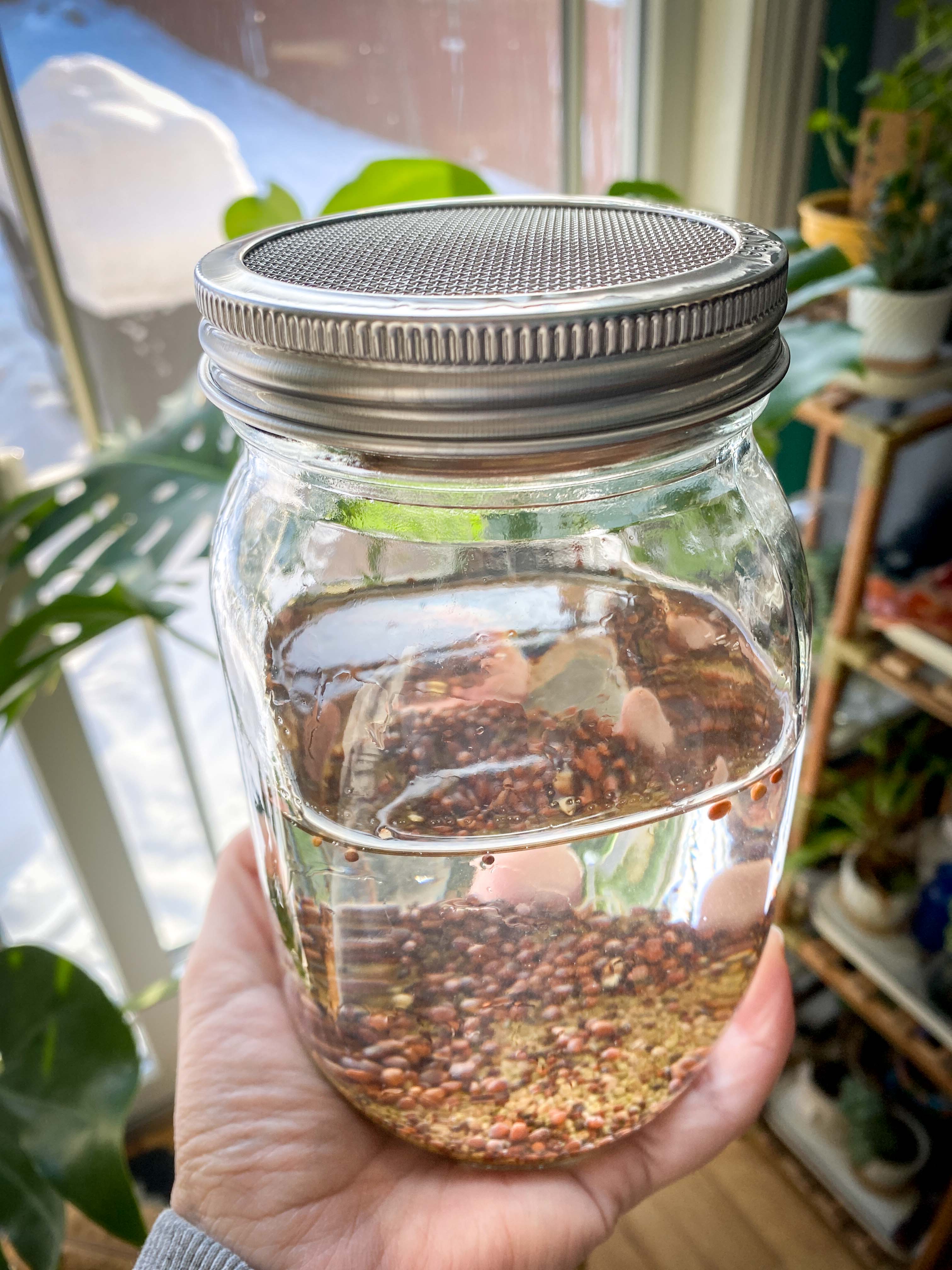
- Begin by measuring out two tablespoons of seeds into a jar.
- Put the lid on with the screen and run water in the jar. Swirl the seeds in the water to rinse them. Dump the water and repeat a few times.
- Fill up the jar with water and let sit for about 8 hours.
- Empty the jar and kind of swirl it as it empties so the seeds spread out in the jar a bit.
- Water the seeds each day and empty the water.
- In about a week you should have sprouts ready to eat!
- To preserve sprouts once they are grown, take them out of the jar and wrap them in a tea towel and place in your fridge.
Ideas for Use
I like to use microgreens in my salad and on sandwiches. You can also use them on ramen. They can be added as a garnish for soups, roasted vegetables, avocado toast, and just about anything.
More Resources
I learned most of what I needed to know from Doug Evans. I recommend checking out his Instagram page if you would like to learn from him.
-
Tikka Masala Masterpiece

I can’t say that I ate Tikka Masala before going vegan, but I will sure be eating this vegan version a lot. Unfortunately, I have nothing to compare it to in terms of authenticity, but this dish was heavenly. I modified Max LaManna’s mushroom dish to use tofu instead and I added a little mango chutney on the side for a little something extra. Yummmmmmy!
Ingredients:
- 2 tbsp neutral oil
- 1 onion, finely diced
- 3 garlic cloves, minced
- 1 tbsp fresh grated ginger
- 1 tsp ground turmeric
- 1 tsp ground cumin
- 1 tbsp garam masala
- 1 tsp chilli powder
- 1 14 oz can diced fire-roasted tomatoes
- 1/2 cup coconut milk
- 1 lime
- Pressed extra firm tofu
- cornstarch
For the Rice
- 1 1/2 cups basmati or jasmine rice
- 1 2/3 cups coconut milk
- 1 cup vegetable stock
- 4-6 cardamom pods
- 1 cinnamon stick
- salt and peper
Optional
- cilantro
- chutney
- Step 1) Preheat the oven to 350 degrees. The tofu and rice will be going in here.
- Step 2) Tear apart the tofu and toss it with cornstarch. Put it on a baking sheet. Rinse the rice under water until water is clear. Add to a baking dish with coconut milk, stock, cardamom, and cinnamon. Season with salt and pepper then cover with foil. Put both dishes in the oven for 40-45 minutes
- Step 3) Heat up a tablespoon of the oil in large saucepan over medium heat. Fry the onion with salt and cook until soft. Add the garlic and ginger. Make a hole in the middle and toss in the spices. Toast for a minute then combine everything in the pan. Add the chopped tomatoes and reduce to a simmer. Cover with a lid and let cook for 20 minutes.
- Step 4) Stir the coconut cream into the curry followed by the crispy tofu. Taste and season well, adding the juice of half the lime.
- Step 5) Serve the curry with rice. Cut fresh cilantro to put on top and add a side of chutney if you’d like.


-
Plants Make Me Happy

It may not be gardening season yet, but I’m not going to let that stop me. I really miss the taste and smell of fresh basil, so it is time to grow some inside. I’ve bought the plants from the produce section of the grocery store in the past, but one of my goals this year is to really learn and embrace the process from seed to harvest. I attempted starting vegetables and herbs from seed once in the past with a tragic ending, but I think this is the year I finally learn how to do it. I’m going to start off simple by growing one of my favorite herbs inside so I can become more confident with the process and will be ready to start veggies in a few weeks.
Here are a couple of videos I used as guidance on how to get started:
- Grow Perfect Basil Indoors
- Planting Herb Seeds + Indoor Herb Growing Tips
- Seed Starting Success: Sow Like a Pro
I also enjoy fresh microgreens on my salad and sandwiches. Today I’m soaking some mung beans and a mix with alfalfa, radish, broccoli, and clover. These are so simple to grow and microgreens are so concentrated with nutrients that they can contain levels up to nine times higher than the mature plants.


Beyond edible plants, I also upgraded my monstera and snake plant to new planter homes and I think they are so absolutely beautiful. They are definitely happy in their new digs and are showing off. I look forward to seeing my snake plant reach for the sky and fill its container nicely :).


Subscribe To My Newsletter
Subscribe for new content.

